



5 Cloud Deployment Models erkunden – Die richtige Wahl für Ihr Business
Was ist Cloud Deployment?
Nachfrage nach Cloud Computing → verschiedene Cloud Deployment Models. Basieren auf ähnlicher Technologie, unterscheiden sich in Skalierbarkeit, Kosten, Performance, Privacy.
Nicht immer klar, welches Cloud Model ideal für Business passt. Decision-Maker müssen Computing & Business Needs faktorisieren & wissen, was Deployment Types bieten.
Weiterlesen für die fünf Haupt-Cloud-Deployment-Modelle & Best Choice für Ihr Business.
Definition
Cloud Deployment = Prozess Building Virtual Computing Environment. Typisch Setup einer Platform:
- SaaS (Software as a Service)
- PaaS (Platform as a Service)
- IaaS (Infrastructure as a Service)
Deploying to Cloud → Organizations erhalten flexible, skalierbare Virtual Computing Resources.
Cloud Deployment Model = Architecture Type der Cloud System Implementation. Unterschiede in Management, Ownership, Access Control, Security Protocols.
Fünf populärste Modelle: Public, Private, Virtual Private (VPC), Hybrid, Community Cloud.
Vergleich der Cloud Deployment Models
| Public | Private | VPC | Community | Hybrid | |
|---|---|---|---|---|---|
| Setup Einfachheit | Sehr einfach, Provider macht meiste Arbeit | Sehr schwer, Team erstellt System | Einfach, Provider macht meiste Arbeit (außer Client wünscht anders) | Einfach durch Community Practices | Sehr schwer durch interconnected Systems |
| Nutzung Einfachheit | Sehr einfach | Komplex, benötigt In-House Team | Einfach | Relativ einfach (Members helfen Problems lösen, Protocols etablieren) | Schwierig wenn System nicht richtig setuped |
| Data Control | Niedrig, Provider hat alle Control | Sehr hoch, Sie ownen System | Niedrig, Provider hat alle Control | Hoch (wenn Members kollaborieren) | Sehr hoch (mit richtigem Setup) |
| Reliability | Anfällig für Failures & Outages | Hoch (mit richtigem Team) | Anfällig für Failures & Outages | Hängt von Community ab | Hoch (mit richtigem Setup) |
| Skalierbarkeit | Niedrig, Provider bieten Limited Resources | Sehr hoch (keine anderen System Tenants) | Sehr hoch (keine anderen Tenants in Ihrem Cloud Segment) | Fixed Capacity Limits Scalability | Hoch (mit richtigem Setup) |
| Security & Privacy | Sehr niedrig, nicht fit für Sensitive Data | Sehr hoch, ideal für Corporate Data | Sehr niedrig, nicht fit für Sensitive Data | Hoch (wenn Members auf Security Policies kollaborieren) | Sehr hoch (Data auf Private Cloud) |
| Setup Flexibilität | Wenig bis keine, Provider bieten meist Predefined Setups | Sehr flexibel | Weniger als Private, mehr als Public | Wenig Flexibilität, Setups meist predefined | Sehr flexibel |
| Kosten | Sehr günstig | Sehr teuer | Erschwinglich | Members teilen Costs | Günstiger als Private, teurer als Public |
| In-House Hardware Demand | Nein | Nicht Must, aber preferable | Nein | Nein | Nicht Must, aber preferable |
Folgende Sections erklären Models im Detail.
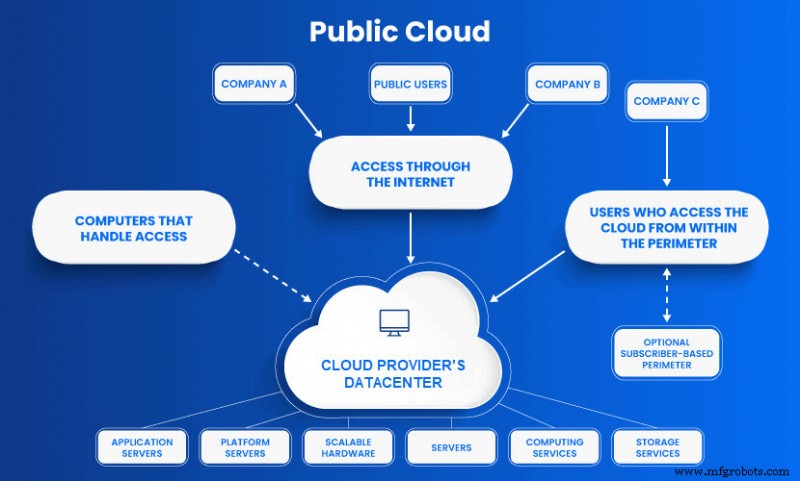
Public Cloud
Meistgenutztes Cloud Service. Beliebt für Web Apps, File Sharing, Non-Sensitive Data Storage.
Service Provider owns & operates alle Hardware für Public Cloud. Devices in Massive Data Centers.
Public Cloud Delivery Model vital für Development & Testing. Developers nutzen oft Public Cloud Infra für Dev & Test. Virtual Environment: Cheap, Easy Config, Quick Deploy → Perfect für Test Environments.
Vorteile Public Cloud
- Low Cost: Günstigstes Model. Neben kleiner Initial Fee → Only Pay für Used Services → No Unnecessary Overhead.
- No Hardware Investment: Provider fundet gesamte Infrastructure.
- No Infrastructure Management: Client braucht kein Dedicated In-House Team für Full Use.
Nachteile Public Cloud
- Security & Privacy Concerns: Jeder kann Access anfragen → No Ideal Protection gegen Attacks. Größe Public Clouds → Vulnerabilities.
- Reliability: Prone zu Outages & Malfunctions.
- Poor Customization: Public Offerings wenig bis keine Customization. Client kann OS & VM Sizing (Storage, Processors) picken, aber nicht Ordering, Reporting, Networking customizen.
- Limited Resources: Incredible Computing Power, aber Shared mit Other Tenants. Immer Cap auf Resource Usage → Scalability Issues.
Private Cloud
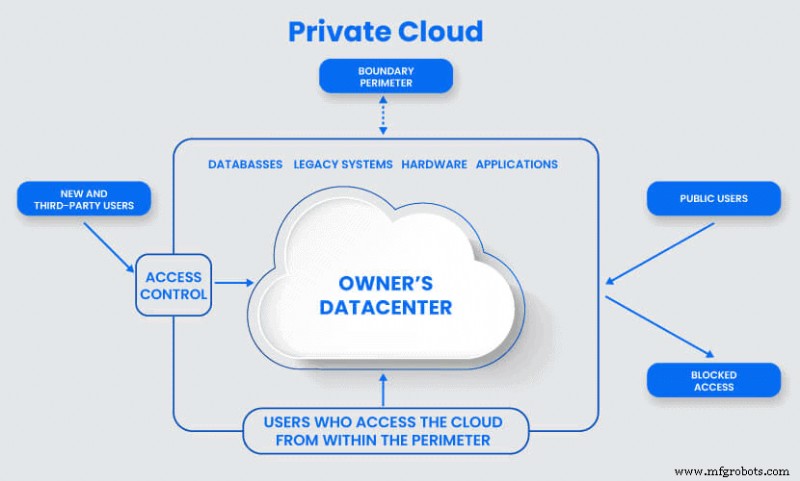
Im Gegensatz zu Public Model (available to anyone) gehört Private Cloud spezifischer Organization. Org kontrolliert System & managed centralized. Third Party (Service Provider) kann Private Cloud Server hosten (Colocation Type), aber meisten Companies halten Hardware in On-Premises Data Center. In-House Team oversees & manages alles.
Auch bekannt als Internal oder Corporate Model.
Vorteile Private Cloud
- Customization: Companies customizen Solution per Requirements.
- Data Privacy: Nur Authorized Internal Personnel Access Data. Ideal für Corporate Data Storage.
- Security: Company kann Resource Sets auf gleicher Infrastructure separaten. Segmentation → High Security & Access Control.
- Full Control: Owner kontrolliert Service Integrations, IT Operations, Rules, User Practices. Exklusiver Owner.
- Legacy Systems: Model unterstützt Legacy Applications, die auf Public Cloud nicht funktionieren.
Nachteile Private Cloud
- High Cost: Hauptnachteil. Invest in Hardware & Software + Resources für In-House Staff & Training.
- Fixed Scalability: Scalability hängt von Underlying Hardware Choice ab.
- High Maintenance: In-House Managed → High Maintenance.
Virtual Private Cloud (VPC)
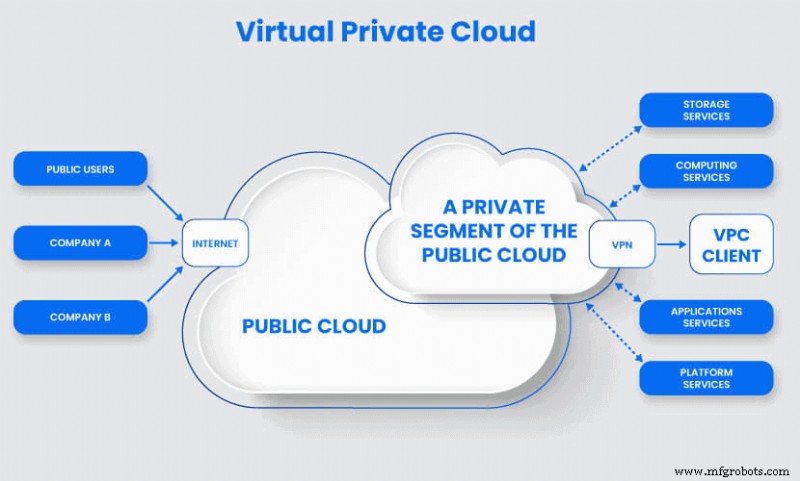
VPC Customer hat Exclusive Access zu Segment eines Public Cloud. Deployment = Kompromiss zwischen Private & Public Model (Preis & Features).
Access typischerweise via Secure Connection (VPN). Auch Restriction by Physical Location via Firewalls & IP Whitelisting.
Vorteile VPC
- Cheaper than Private Clouds: VPC kostet nicht nearly as much als Full-Blown Private Solution.
- More Well-Rounded than Public Cloud: VPC hat bessere Flexibilität, Skalierbarkeit, Security als Public Cloud Provider bieten kann.
- Maintenance & Performance: Weniger Maintenance als Private Cloud, mehr Security & Performance als Public Cloud.
Nachteile VPC
- Nicht Private Cloud: Trotz Versatility → noch sehr restriktiv bei Customization.
- Typical Public Cloud Problems: Outages & Failures Commonplace in VPC Setup.
Community Cloud
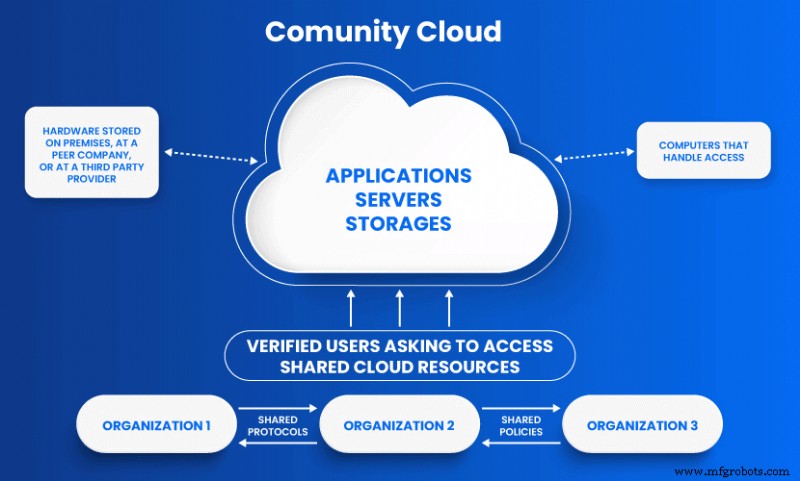
Community Cloud Deployment Model operiert wie Public Cloud. Unterschied: Nur Specific Group of Users mit Shared Interests & Use Cases haben Access.
Hosting: On-Premises, Peer Organization, Third-Party Provider. Kombination aller drei möglich.
Typischerweise: Alle Orgs in Community haben gleiche Security Policies, Application Types, Legislative Issues.
Vorteile Community Cloud
- Cost Reductions: Günstiger als Private, doch Comparable Performance. Multiple Companies teilen Bill → Additional Cost Lowering.
- Setup Benefits: Config & Protocols innerhalb Community System treffen Needs spezifischer Industry. Collaborative Space → Clients Enhance Efficiency.
Nachteile Community Cloud
- Shared Resources: Limited Storage & Bandwidth Capacity Common Problems.
- Still Uncommon: Neuestes Deployment Model Cloud Computing. Trend noch catching on → nicht in jeder Industry Option.
Hybrid Cloud
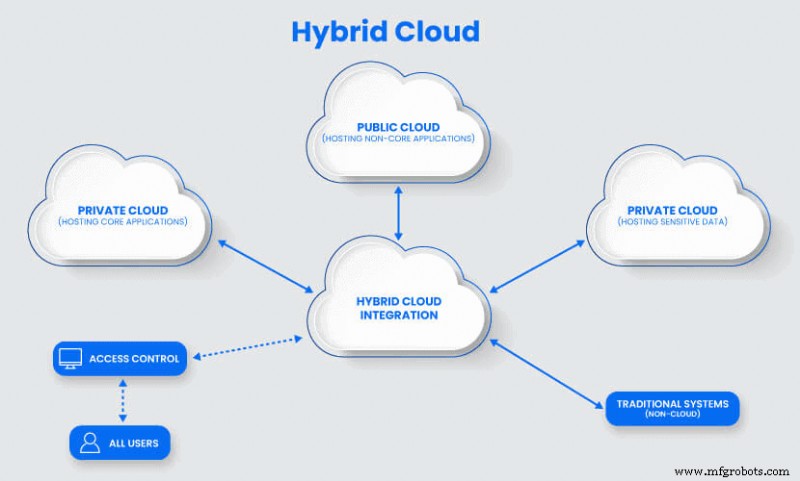
Hybrid Cloud = Kombination von zwei oder mehr Infrastrukturen (Private, Community, VPC, Public Cloud, Dedicated Server). Jedes Model = Separates System, aber alle Teil Same Architecture.
Typisches Deployment Example: Company stored Critical Data auf Private Cloud, Less Sensitive Info auf Public Cloud. Another Use Case: Portion Firm's Data kann legal nicht auf Public Cloud stored werden.
Hybrid Cloud Model oft für Cloud Bursting verwendet. Cloud Bursting: Org runs Applications On-Premises aber „burst“ in Public Cloud bei Heavy Load. Excellent für Orgs mit Versatile Use Cases.
Vorteile Hybrid Cloud
- Cost-Effectiveness: Hybrid Solution lowers Operational Costs via Public Cloud für Most Workflows.
- Security: Einfacher Hybrid Cloud vor Attackers zu schützen (Segmented Storage & Workflows).
- Flexibilität: High Levels Setup Flexibility. Clients erstellen Custom-Made Solutions fitting Needs Entirely.
Nachteile Hybrid Cloud
- Complexity: Hybrid Cloud Complex zu Setup & Manage (Kombination zwei oder mehr Cloud Service Models).
- Specific Use Case: Hybrid Cloud macht Sinn nur wenn Org Versatile Use Cases hat oder Sensitive/Non-Sensitive Data trennen muss.
Wie zwischen Cloud Deployment Models wählen
Bestes Cloud Deployment Model für Company wählen → Start mit Defining Requirements für:
- Skalierbarkeit: User Activity Growing? Sudden Spikes in Demand?
- Ease of Use: Team Skilled? Time & Money für Staff Training investieren?
- Privacy: Strict Privacy Rules um Collected Data?
- Security: Sensitive Data stored das nicht auf Public Server gehört?
- Cost: Resources für Cloud Solution? Upfront Capital?
- Flexibilität: Wie Flexibel (oder Rigid) sind Computing, Processing, Storage Needs?
- Compliance: Notable Laws/Regulations in Country/Industry? Adherence zu Compliance Standards nötig?
Antworten helfen Pick zwischen Public, Private, VPC, Community, Hybrid Cloud.
Typischerweise: Public Cloud ideal für KMU (besonders Limited Demands). Größere Org → mehr Sinn für Private Cloud oder VPC.
Für Bigger Businesses minimizing Costs: Compromise Options wie VPCs & Hybrids. Wenn Niche Community Offering hat → Worth Exploring.
Weise in Enterprise Cloud Computing Services investieren
Jedes Cloud Deployment Model bietet Unique Value für Business. Mit Strong Understanding jeder Option → Informed Decision & Pick Highest ROI.
Wenn Security Top Priority: Mehr über Data Security Cloud erfahren (Safest Cloud Option am Markt).
Cloud Computing
- Warum Cloud Security der Eckpfeiler moderner Cyber Defense ist
- Cloud Computing von Grund auf meistern: Praktischer Guide für Einsteiger
- Warum Cloud-Kultur den Geschäftserfolg antreibt: Ein praktischer Leitfaden
- Cloud Computing Infrastruktur: Professioneller Leitfaden zu den Fundamenten
- Bedroht die Cloud Data Center Jobs? Realistische Einschätzung
- Wie Cloud Computing die Gaming Industrie transformiert
- Re-Platforming in der Cloud: Was es ist und wie es effiziente Migration vorantreibt
- Google Cloud SDK: Vollständiger Leitfaden zu Features, Setup & Vorteilen
- Top 10 Cloud Computing Jobs in Großbritannien
- DevOps in der Cloud deployen: Bewährter Blueprint für digitale Transformation