



Hybrid Cloud Herausforderungen meistern: Strategien für erfolgreiche Adoption
Warum Unternehmen Hybrid Cloud Solutions wählen
Hybrid Cloud = kosteneffiziente Cloud Solution mit hoher Flexibilität, Reliability & Performance. Adoption bringt Herausforderungen, meist während initialem Cloud Setup → frühes Lösen Priorität.
Dieser Artikel untersucht die 11 häufigsten Herausforderungen der Hybrid Cloud Adoption und erklärt, wie Businesses diese überwinden & Hybrid Cloud Environment verbessern.
Hybrid Cloud Definition
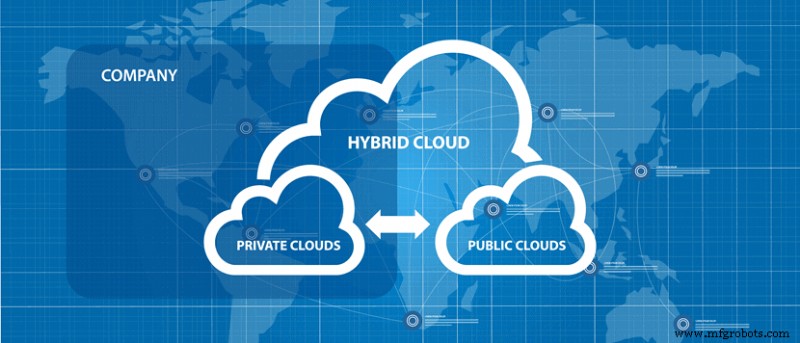
Kombination von zwei oder mehr Cloud & On-Premises Infrastrukturen. Kann jeden Mix umfassen:
- Public Clouds
- Private Clouds
- Community Clouds
- Virtual Private Clouds (VPCs)
- Dedicated Server
Jede Komponente = separates System mit eigener Security, Access Controls, Operatoren. Komplexer als Private/Public Solutions, aber vitale Business Benefits:
- Budget-friendly: Public Cloud für meisten Workflows → Kosten niedrig
- Flexibilität: Custom Solutions passend zu Needs
- Security: Segmentierte Storages & Workflows schützen Data Flow
- Skalierbarkeit: Nötige Ressourcen kurzfristig via Public Cloud
- Mehr Agilität: Speed to Market Improvement via IT Performance Optimization
Hybrid Cloud = beliebtestes Cloud Deployment Model am Markt. Ermöglicht: Vital Data auf Private Cloud, Non-Essential Data auf Public Cloud. High Performance auch bei Massive Data & Workloads.
11 Hybrid Cloud Adoption Challenges (Lösungen)
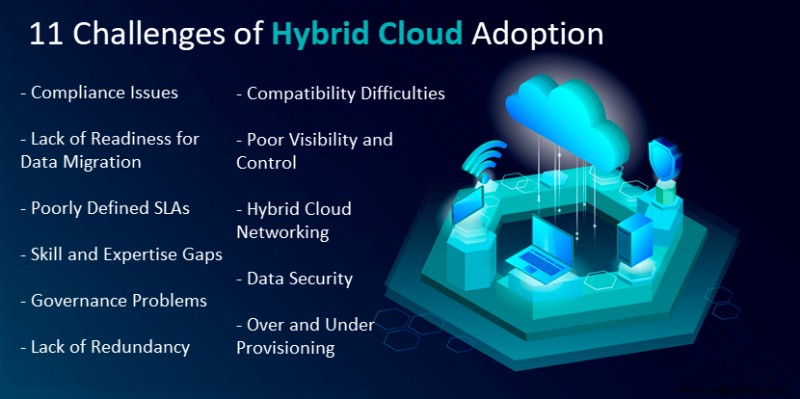
Compliance Issues
Je nach Industrie/Location: Spezifische Laws/Regulations für Data Usage & Storage. Beispiele: Healthcare → HIPAA; Financial Data → PCI DSS.
Compliance in Multi-Cloud Environment schwierig. Tipps:
- Spezifische Regulation in Initial Workload & Storage Planning einbeziehen
- Jedes Hybrid Segment als Single Entity UND als Teil Unified System inspizieren. Komponenten-Compliance in Vakuum ≠ Interaction zwischen Subsystemen risk-free
- Staff Training in Compliance Guidelines investieren. Additional Tools für In-House Process Compliance
- Cloud Provider Compliance mit relevanten Standards/Regeln sicherstellen (Government Certificate)
Mangelnde Bereitschaft für Data Migration
Move zu Hybrid System von anderer Cloud/Data Center = zeitaufwendig & schwierig.
Migration involviert Integration von:
- Individuellen Cloud Brands & Providers
- Native Features
- Verschiedenen Komponenten (Databases, ML, Cloud Monitoring Tools & Systems, etc.)
Team muss vor Migration folgende Tasks performen:
- Operational & Performance Workload Features analysieren
- Capacity Plan erstellen, Unused/Underutilized Services eliminieren
- Provisioning von Data, Storage, Network, Security, Application Stacks planen
- Current Applications & Workloads portable & operable across On-Premises Framework machen
Schlecht definierte SLAs (Service-Level Agreements)
Fine Print vor SLA Signing mit Cloud Provider lesen. SLA definiert Conditions, Guarantees, Terms bezüglich System Uptime & Data Availability.
SLA Content muss Performance & Security Needs vollständig reflektieren. IT & Legal Departments sollten Document auf Potential Issues inspizieren.
Provider muss gleiche Standards agreeen wie On-Premises Infrastructure Protection. Misalignment → Weak Points & Potential Dangers.
Skill & Expertise Gaps
Teams verlassen sich zu sehr auf Provider für Hybrid Cloud Management. Overreliance auf Outsourced Help → Inefficient Decision Making, Potential Dangers, Fewer Business Opportunities.
Business muss Staff auf Cloud Computing trainieren & Team fähig für Hybrid Setup growen.
Staff Expertise nötig für:
- Application Architecture Design
- Workload Processes
- Application & Integration Development
- Cloud Monitoring
In Team Training investieren, aber auch New Talent mit Hybrid Experience hiring. Neue Team Members → Fresh Perspective, erhöhte Daily Operations Efficiency.
Governance Probleme
Ziel Governance in IT Setup:
- Standardisierung fördern
- Oversight & Direction bereitstellen
- IT Quality verbessern
- Prozesse beschleunigen
Robuste Governance Structures nötig für Hybrid Cloud. Structure muss Best Practices umfassen für:
- Frame Considerations
- Cloud Network Access
- On-Demand Services
- Resource Pooling
- Elastizität
Cloud Management Platform (CMP) für Single-Console Monitoring & Management von Data, Security, Policies in Hybrid Environment. CMP vereinfacht Cross-Management von Public & Private Clouds.
Kompatibilitätsprobleme
Hybrid Setup nutzt Public & Private Cloud + On-Prem Dedicated Server. Multiple Infrastructures & Tech Stacks in Single Architecture → leicht Inkompatibilität von Tools & Processes.
Fragen vor Hybrid Cloud Adoption:
- Können alle Components auf gleichen Tool Set relyen?
- Muss Team neue Tools lernen für Kompatibilität?
- Sind Ihre Tools & Processes kompatibel mit Cloud Provider?
Antworten vorher kennen → Time & Money Savings.
Mangelnde Visibility & Control
Companies struggle mit View & Control aller Systems in Hybrid Infrastructure. Führt zu:
- Schwierigkeiten Self-Service Systems Implementation
- Low Transparency Configuration Settings
- Lack of Collaboration
- Agile Development Problems
Transparent & Smooth Infrastructure via Automation & Right Tooling:
- Automation → Share, Repeat, Verify Code. Simplifies System Management, bessere Control.
- DevOps Tools für Centralized Management & Visibility across Entire Hybrid Infrastructure.
Hybrid Cloud Networking
Korrektes Mapping Network Topology crucial in Hybrid System (Virtual & Physical Separation zwischen Components).
Network Topology muss Security & Potential Latency zwischen Internal & External Resources factor in. Design muss account for:
- Bandwidth Needs
- Management von Private & Public Clouds
- Branch Network Locations
- Requirements per Application
Meiste Cloud Provider erkennen Connectivity Importance & haben Hybrid Cloud Network Solutions (AWS Direct Connect, ExpressRoute). Dennoch: Company sollte sicherstellen, dass Network Developers Scalability Needs der Applications verstehen & Impact auf Hybrid Infrastructure.
Mangelnde Redundanz
Häufigste Security Challenge bei Hybrid Cloud Adoption. Fehlende Redundanz = Backup Copies nicht in IT Infrastructure vorhanden.
Backup & Disaster Recovery für Redundanz across Entire Data Center. Eliminiert Data Loss Possibility, garantiert Data Availability bei Outage.
Data Security
Data at Risk both In Transit & At Rest in Complex Hybrid-Cloud Environment. Protection At Rest:
- Full-Disk oder Partition Encryption
- Hardware Encryption & Security Modules
- Keine manuelle Password Entry in Encrypted Drives durch Employees
- TPM als Teil von NBDE für Additional Security Layer in Hybrid-Cloud Operations
Hauptbedrohungen In Motion: Interception & Alteration. Network Session Encryption → Safety of Data in Motion. Internet Protocol Security (IPsec) für Communication zwischen Hosts via Internet Protocol (IP).
Breach-and-Attack (BAS) Simulations für Hybrid Cloud Resilience Testing. Data most vulnerable beim Move zwischen Cloud Environments → Test für DDoS Protection & Man-in-the-Middle Attacks.
Over- & Under-Provisioning
Cloud Provisioning = Allocation Provider Resources & Services. Hybrid Cloud nutzt zwei Methods:
- Dynamic Provisioning (Cloud Bursting): Deployment Scales Up/Down für Usage Spikes/Dips. Billing Pay-per-Use.
- Self-Provisioning: Managed Self-Service: IT Team zahlt für Additional Resources auf Public Cloud zum Usage Level Match.
Automate Provisioning via Scaling Distributed Applications across Cloud Environments. Orchestration Tool für Transparent Consumption Costs & Avoid Unnecessary Overhead.
Hybrid Cloud Systems voll ausschöpfen
Hybrid Cloud = Game Changer für Businesses, aber careful Approach nötig für Pitfall Avoidance. Aware of Challenges & solve Issues bevor sie Time & Money kosten.
Cloud Computing
- Hybrid IT: Warum die Cloud nicht das Endgame ist
- Cloud-Horizonte erweitern: Neue Zonen, Container und Multicloud-Strategien
- Cloud-Adoption: Warum eine maßgeschneiderte Strategie One-Size-Fits-All übertrifft
- Cloud-On-Premise-Balance meistern: Strategien für sichere, effiziente Workloads
- Cloud-Applikations-Monitoring meistern: Einblicke für IT-Führungskräfte
- Cloud- & SaaS-Lizenzierung verstehen: Ein praktischer Leitfaden
- Hybrid Cloud: Vorteile, Nachteile und wie Sie die richtige Strategie wählen
- Aufstrebende Cloud-Computing-Trends: 2019 und darüber hinaus
- Essenzielle Cloud-Computing-Strategien für Startups und Enterprises
- Die richtige Cloud-Strategie wählen: Public, Private und Hybrid Solutions erklärt